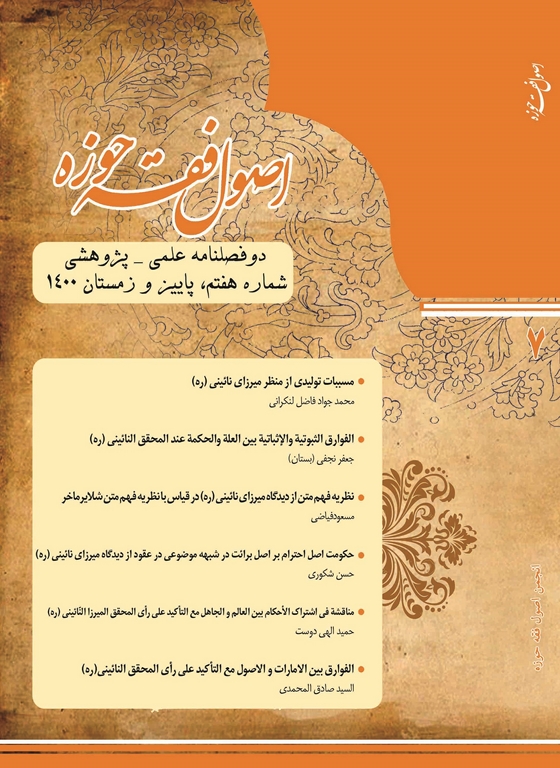
نوع مقاله : مقاله پژوهشی
عنوان مقاله English
نویسنده English
One of the most important titles in ʿIlm al-Uṣūl is the conjectural proof (better known as amāra) and "practical principle''. Many arguments have been presented concerning these two instruments of derivation of legal rulings in the Islamic jurisprudence. One of them is the distinction between the two, and there is a serious difference of opinion among the scholars of Uṣūl with some of them denying the existence of Sharʿī majʿūl (or enacted rule) and some others accepting its existence in the conjectural proofs. Those who believe in the existence of a majʿūl also differ in their opinions concerning it inasmuch as some believe that only defining laws (al-aḥkām al-taklīfīya) are enacted whiles others say that only declaratory laws (al-aḥkām al-waḍʿīyya) are enacted. This article tries to give a clear statement of all the sayings, especially the sayings of Muḥaqiq Nāʾīnī (ra) and the distinction between them, and of course, there is novelty in terms of explanation and the way he examines and expresses some points.
کلیدواژهها English